August 1st, 2018
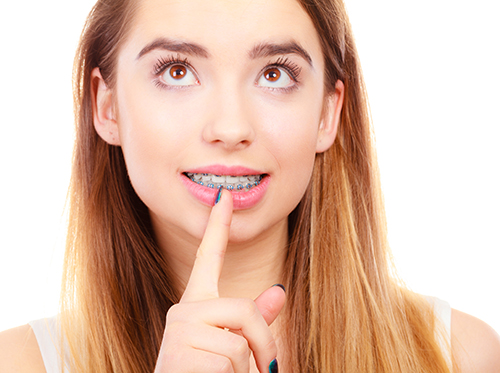
If you’ve visited Oak Mountain Orthodontics, then there’s a good chance you’re looking to perfect your smile by straightening your teeth with braces. At some point during your treatment, you may need to use elastics, otherwise known as rubber bands, for a certain period. These are used to apply additional pressure that will move your teeth in the right direction.
Placement of the elastics is specific to each patient’s teeth. These small rubber bands stretch over the tiny loops on both the top and bottom brackets. At first, Dr. Priscila Denny may recommend you wear the elastics both day and night for an extended time.
You may be told to switch only to nighttime wear once the teeth are set in the correct position. By consistently wearing the elastics, you can shorten the overall time your braces will have to be on.
The elastics are made from medical-grade latex. If you have an allergy to latex, make sure to let Dr. Priscila Denny know, so you can be given an alternate material. We will show you how to take elastics on and off when they’re given to you at your appointment.
You should remove them when you eat so they don’t become overstretched or break. It’s important not to overstretch the bands, and always to replace them if they break. Eventually it will become a familiar habit to carry the bands around with you for times when this might happen.
The Do’s and the Don’ts
- DO … always wash your hands before removing or replacing the rubber bands.
- DO … call us if you run out of elastics.
- DO … get in the habit of carrying around extra rubber bands as replacements.
- DON’T … double up on elastics because this can exert too much pressure on your teeth and could actually harm the roots.
- DON’T … overstretch the rubber bands or they will lose strength and become ineffective.
If you were recently given elastics as well as your braces, feel free to ask any questions during your appointment, or call our Birmingham or Helena, AL office any time. Using elastics correctly is one more step in your journey to a perfect smile!
July 25th, 2018

Bad breath, or halitosis, is probably not a matter of life or death. But it can make you feel self-conscious and have a negative impact on your life. The majority of people suffering from bad breath are dealing with oral bacterial. However, there are other causes of this embarrassing problem. Learning more can help you fight this solvable problem.
Five Causes of Embarrassingly Bad Breath
- Dry Mouth. A decrease in saliva flow can be caused by several things. Most often, medication or mouth breathing are the culprits. As saliva helps wash away food particles from your mouth, it prevents bad breath. Dry mouth can be dealt with by stimulating salivation.
- Gum Disease and Poor Oral Hygiene. Not brushing and flossing well enough or with enough frequency can lead to gum disease, which leads to bad breath. Halitosis can be a sign that plaque is present on your teeth.
- Food-Related Bad Breath. Food particles that aren't brushed or flossed away attract bacteria that leads to bad breath. It's especially important to brush after eating strong-smelling foods, such as garlic or onions.
- Smoking and Tobacco. Tobacco is bad for your health, and that includes your oral health. Smoking or chewing tobacco can contribute toward the development of gum disease, as well as oral cancer.
- Mouth Infections and Other Medical Problems. A mouth infection, sinus infection or even the common cold can cause you to temporarily have bad breath. Even conditions such as diabetes and reflux can cause halitosis. It's always wise to see Dr. Priscila Denny to help determine the cause.
We are Your Ally
Even if you maintain good oral hygiene, it's important to see Dr. Priscila Denny at our Birmingham or Helena, AL office to deal with or avoid problems with bad breath. We can help you uncover the cause of halitosis, while also providing solutions that allow you to enjoy fresh breath without relying on mints and breath fresheners. As is the case with all things related to oral health, we are your number-one ally when it comes to eliminating the problem of bad breath.
July 18th, 2018
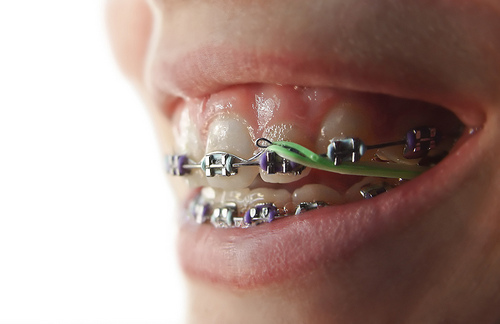
Most of our patients at Oak Mountain Orthodontics will need to wear rubber bands at some point during their orthodontic treatment. The main reason our patients are instructed to wear rubber bands is to correct their bite. If your teeth do not fit together properly, Dr. Priscila Denny will recommend that rubber bands be used. Dr. Priscila Denny may also recommend using rubber bands to close or open spaces.
Rubber bands are a critical part of your treatment, and wearing them as Dr. Priscila Denny and our team recommend will help move your teeth into the desired position. Dr. Priscila Denny may ask you to wear your rubber bands full time, meaning that they should only be taken out when you brush and floss your teeth three times a day. Other times, you may be asked to only wear them part-time, like only during the day or only during sleep.
If you still have any questions about orthodontic rubber bands, we invite you to give us a call or ask us during your next adjustment appointment. Remember, wearing rubber bands as prescribed by Dr. Priscila Denny is an important step during your treatment, and can reduce the time you have your braces. If you lose your rubber bands or run out, stop by our Birmingham or Helena, AL office and pick up more!
July 11th, 2018

It's a habit many people have and not only can it be annoying to the people around you, it can be detrimental to your dental health. Chewing ice is so common that it even has its own name, pagophagia. We're not talking about a slushy or shaved ice (although those artificially sugary treats should be avoided too!) but more like the hunks of ice rattling around in the bottom of your glass.
Ice chewing can be a sign of emotional problems like stress or obsessive-compulsive disorder, but it can also be a marker for iron deficiency anemia and other physical problems. Then again, some people just like to have something to chew on. For whatever reason you find yourself chewing on it, it's a habit you need to break.
Chewing on ice can cause:
- Chipped and cracked teeth
- Damaged enamel
- Sore jaw muscles
- Damage to dental work such as crowns, fillings, or other appliances
If chewing on ice is becoming a problem in your life, don’t hesitate to speak with Dr. Priscila Denny about it. But if you find yourself still wanting to chew on something, here are a few alternatives to ice:
- Baby carrots
- Celery sticks
- Sugar-free (xylitol) gum
We know you need to chill sometimes, but chomping down your entire glass of ice is not the way to do it. If you have any other questions on the topic, feel free to talk with a member of our Birmingham or Helena, AL team. It may be beneficial in solving the issue and helping to remediate any damage to your teeth.