

Our Blog

Team Dark Chocolate

February 13th, 2019
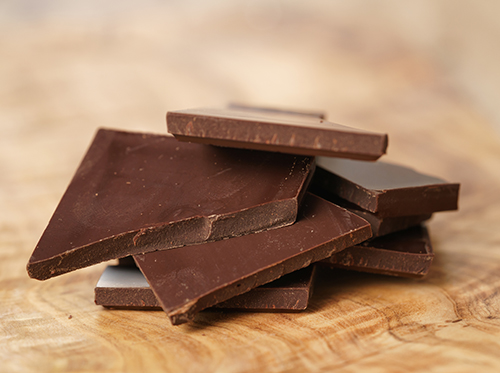
Valentine’s Day is the holiday to celebrate all the treasured relationships in your life. It’s a time to honor love in all shapes and forms with cards, social gatherings, and sometimes even binge eating of sweets.

It's hard to look the other way when grocery stores and pharmacies are invaded with goodies connected to the Valentine’s Day theme, and especially if you’re on the receiving end of some of these sweets. We get it. In fact, we’re all for it!

However, we also support a cavity-free smile. So in the interest of your dental and general health, and because we think it’s genuinely tasty, Dr. Priscila Denny recommends an alternative to the Valentine treats you may be accustomed to: dark chocolate. 

Yes, Healthy Chocolate Exists

Studies have shown that dark chocolate is high in flavonoids, an ingredient found in the cocoa beans used to make chocolate. Flavonoids can help protect the body against toxins, reduce blood pressure, and improve blood flow to the heart and brain.

By opting for dark chocolate rather than milk chocolate, you get to reap these benefits! Pretty sweet, right? Just make sure to stick to high-quality dark chocolates that have undergone minimal processing.

Dark Chocolate, AKA Protector of Teeth

Not only does dark chocolate provide some nice benefits for your overall health, it also helps protect your teeth against cavities! According to the Texas A&M Health Science Center, dark chocolate contains high amounts of tannins, another ingredient present in cocoa beans.

Tannins can actually help prevent cavities by interfering with the bacteria that causes them. Think of them as scarecrows for bacteria. They don’t always prevail, but isn’t it nice to have them there?

Smooth Never Sticky

Unlike many popular candies, dark chocolate is less likely to stick in the crevices of your teeth. Chewy, gooey sweets are more likely to hang around in your mouth for longer periods of time, which means they raise the odds of your harboring cavity-creating bacteria.

While some dark chocolates have additives like caramel or marshmallow, it’s best to opt for the plain varieties, which are just as delicious. If you’re feeling festive, though, a dark chocolate with caramel is still better than a milk chocolate with caramel, so that’s the way to go!

While dark chocolate has some pretty sweet benefits, the most important thing to remember (whether you go the dark chocolate route or not), is that moderation is key. That being said, we hope you have fun satisfying your sweet tooth and shopping for treats for your friends and loved ones. Happy Valentine’s Day from all of us at Oak Mountain Orthodontics!

Permanent or Removable Retainers: Which is right for you?

February 6th, 2019

When the time comes for Dr. Priscila Denny to remove your braces, it is very exciting. Unfortunately, it can be somewhat confusing, too, because you are faced with choosing between two kinds of retainers. Should you go with permanent, removable, or a combination of the two? It is always wise to follow Oak Mountain Orthodontics recommendations, but knowing more about the two types of retainer beforehand can be helpful.

Removable Retainers

Removable retainers offer the advantage of easy use: you will generally put a removable retainer in at night and take it out in the morning. Regardless of your retainer schedule, you'll be able to enjoy some time with no retainer. However, a removable retainer can easily be forgotten at times, and this means you won't be taking full advantage of teeth retention.

Another potential advantage of a removable retainer is that you can take it out and brush and floss your teeth with ease, which is more of a challenge with a permanent retainer. Although removable retainers can be very effective, they don't tend to be as effective as permanent retainers, especially if they are not used as directed.

Permanent Retainers

Permanent retainers are the clear choice for patients who want to “get it and forget it.” Once your permanent retainer is placed in your mouth, you won’t need to worry about daily retainer schedules, since it is permanently affixed to your teeth.

Because teeth begin to shift naturally as we age, a permanent retainer typically offers better long-term results for teeth straightening than a removable one. You can't forget to put it in — it's already there! Temporary retainers get lost or are forgotten on trips, and often fail to get used as often as they should be.

One drawback to permanent retainers is flossing. Some patients find it more difficult to floss with a permanent retainer, but we can show you effective ways to floss fairly quickly with your permanent retainer.

Some orthodontists may recommend a combination of the two; for example, a removable retainer for the top teeth and a permanent one for the lower ones because the lower teeth are smaller and tend to shift more.

Ultimately, the most important thing to remember is that wearing your retainer as directed is extremely important. As long as you follow our orthodontist’s advice, you will get the best results from your retainer, regardless of its type. If you’re still not sure whether the choice you’ve made is truly right for you, get in touch with us at our Birmingham or Helena, AL location right away!

Not-So-Sweet Sweets

January 30th, 2019

Birthdays. Valentine’s Day. Halloween. A trip to the movies. There are just some occasions where a sweet treat is on the menu. Now that you are getting braces, does that mean you have to give up desserts completely? Not at all! The trick to finding the right treat is to know which foods are safe for your braces and which should wait until your treatment is complete.

There are some foods which should always be avoided. They fall into three main categories:

  • Hard and Crunchy

Hard candies, peanut brittle, popcorn balls, nutty candy bars—anything that is hard to bite into is hard on your braces, and can damage brackets or even break them.

  • Chewy

Caramels, taffy, chewy squares and rolls, licorice and other super-chewy candies can break brackets and bend wires. Not to mention, they are really difficult to clean from the surface of teeth and braces.

  • Sticky

Soft foods are generally fine, but soft and sticky candies are another thing entirely. Gumdrops, jelly beans, most gum and other sticky treats stick to your braces, making it hard to clean all that sugar from around your brackets. And even soft sticky candies can bend wires or damage your brackets.

As you have probably noticed, almost all candy falls into one of these categories. Of course, while sugary treats shouldn’t be a major part of anyone’s diet, and careful brushing and flossing are always on the menu if you do indulge, wearing braces does not mean giving up on treats entirely. A better alternative when you are craving something sweet is to choose something that avoids crunchy, chewy and sticky hazards, such as soft puddings, cupcakes or cookies. There are even some candy brands that are safe for your braces.

Talk to Dr. Priscila Denny the next time you visit our Birmingham or Helena, AL office about the dos and don’ts of desserts—we have tasty suggestions that will make those special occasions both sweet for you and safe for your orthodontic work!

Orthodontic Treatments

January 23rd, 2019

It’s not unusual for a patient to be unaware of the range of services that orthodontists can provide for their patients. Knowing which services Dr. Priscila Denny and our team perform can help you better understand your options and why we might select a particular method of treatment.

Both orthodontists and dentists care about good oral health, but they approach treatment in differing ways. You know that dentists clean teeth and treat gum disease, tooth decay, toothaches, and other oral health problems.

But what does your orthodontist do besides help straighten teeth with the help of braces? Orthodontists are commonly known to help fix or realign crooked teeth. Many of the patients at Oak Mountain Orthodontics come in for appointments that relate to their braces.

Dr. Priscila Denny and our team recommend that children be seen around the age of seven to evaluate their potential orthodontic needs. Common problems may include overcrowding of teeth, large gaps or spaces, and overbites or underbites, among other things.

In order to address these common problems, we offer several methods of treatment besides standard braces and retainers:

  • Space maintainers can be used to fill the spaces left by missing baby teeth so other teeth don’t shift and occupy the adult tooth’s location.
  • Jaw repositioning appliances, sometimes known as splints, are used to reposition the upper and lower jaw bones correctly.
  • Lip and cheek bumpers can also be used to avoid having to pull teeth. These bumpers are placed in the mouth so the patient’s lips or cheeks don’t put pressure on specific teeth.
  • A more common appliance that orthodontists use is expanders. If your mouth is crowded, expanders will be placed on the curve of the upper and/or lower jaw(s) in order to make room for teeth to be properly aligned.
  • As a last resort, an orthodontist may turn to headgear. This is normally provided to slow down the growth of the jaw. It must be worn a number of hours each day.

When you visit our Birmingham or Helena, AL office, we will go over these options with you and pick the best course of treatment, depending on the current state of your oral health.

No matter which oral appliances you end up with, Dr. Priscila Denny and our team will go over all the available options with you to give you a beautiful smile. If you have questions regarding your treatment method, don’t hesitate to call our office and we can provide you with some insight.

Understanding the different options your orthodontist can provide should make matters less confusing if you should need to select a method of treatment.

Contact Us!
call email